How is Día de Reyes celebrated?
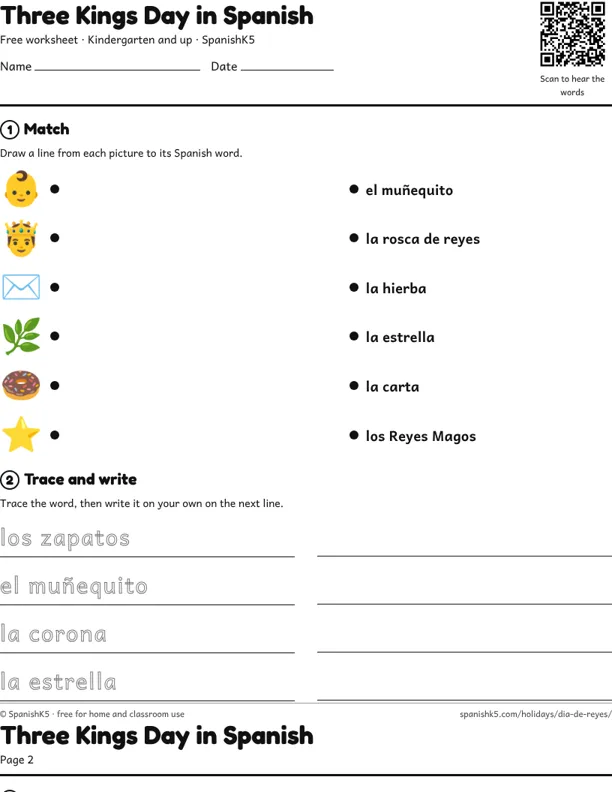
Los Reyes Magos are the three kings from the Christmas story: Melchor, Gaspar and Baltasar. They followed a bright estrella to find baby Jesus and brought him gifts.
On the night of January 5, many children write a carta to the Kings asking for a gift. They leave their zapatos by the door or under the tree. In Puerto Rico, many kids also leave a box of grass, hierba, for the Kings' hungry camels.
On the morning of January 6, kids run to their shoes and find regalos. In some towns there's a parade, called a cabalgata, with the three kings riding through the streets and tossing candy.
That afternoon, families share la rosca de reyes, a sweet bread baked in a ring to look like a crown. It's decorated with strips of candied fruit, like jewels.
Hidden inside the rosca are one or more tiny baby figures, called muñequitos. Everyone cuts a slice. In Mexico, whoever finds a figure in their slice hosts a tamal party on February 2, el Día de la Candelaria.
Día de Reyes marks the end of the Christmas season. After January 6, families start putting away their decorations.
For parents and teachers
Día de Reyes comes from the Christian feast of the Epiphany. Many families celebrate it as both a religious and a family tradition, and you can teach the customs and words either way.
Don't confuse the rosca de reyes with the king cake many Americans know from Mardi Gras. They're related traditions, but the rosca is a Three Kings Day bread, eaten on January 6.
The baby figures in the rosca are small. If you bake or buy one, tell young children to eat slowly and check their slice.
More holidays: Navidad, San Valentín, Cumpleaños, Pascua, Cinco de Mayo for Kids, Día de las Madres, Día del Padre, Hispanic Heritage Month for Kids, Mexican Independence Day for Kids, Halloween in Spanish for Kids, Día de los Muertos, Día de Acción de Gracias, Las Posadas for Kids, Año Nuevo, Día del Niño, Regreso a Clases, Día de la Candelaria for Kids, Carnaval for Kids, Día de la Tierra, Fourth of July in Spanish for Kids, Día del Maestro, Día de la Bandera, Inti Raymi, Día de los Abuelos, Fiestas Patrias, Colombia's Independence Day (July 20) for Kids, Argentina's Independence Day (July 9) for Kids, Fiestas Patrias, Día de los Inocentes, La Guelaguetza, Central American Independence Day (September 15) for Kids, Noche de San Juan, Feria de las Flores.