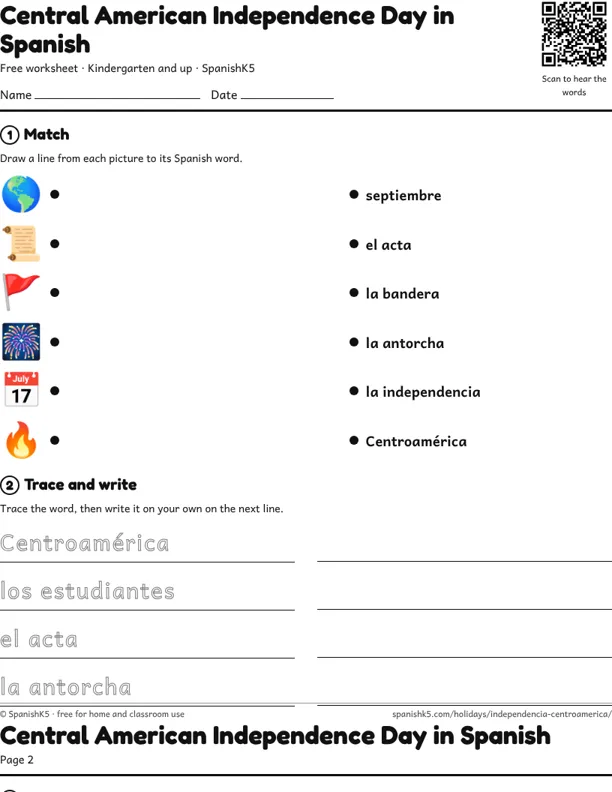
On September 15, five countries celebrate their independence together: Guatemala, El Salvador, Honduras, Nicaragua and Costa Rica. They remember September 15, 1821, when the Act of Independence of Central America was signed in Guatemala City. Students carry la antorcha (a torch) from country to country, and kids in Costa Rica parade with faroles (lanterns).
How is Independencia de Centroamérica celebrated?
Imagine a celebration shared by five countries at once. Every September 15, Guatemala, El Salvador, Honduras, Nicaragua and Costa Rica all celebrate el Día de la Independencia. Schools march in parades, bandas play music, and flags fill the streets.
Why do they share the same day? In 1821, all five were part of one Spanish colony governed from Guatemala. On September 15, 1821, leaders met in Guatemala City and signed the Acta de Independencia of Central America, ending Spanish rule in the region.
The most famous tradition is la Antorcha de la Independencia, the Independence Torch. Students carry a lit antorcha in a relay that starts in Guatemala and crosses each border until it reaches Costa Rica. It stands for libertad (freedom), peace and friendship between the countries.
In Costa Rica, the night before, September 14, children walk through their towns carrying homemade faroles, lanterns made from paper, boxes or cans and lit from inside. The lantern parade has been a Costa Rican tradition since 1953, and kids work for days on their designs.
On September 15 itself, there are school desfiles with drums, dancing and costumes, and families share traditional foods. Each country adds its own flavor, but everyone celebrates the same historic day.
You can say ¡Feliz Día de la Independencia! to friends from any of these five countries. And if you make a farol, you can join the celebration from wherever you live.
For parents and teachers
Find the five countries on a map and trace the torch's path from Guatemala to Costa Rica.
Mexico celebrates its independence on September 16, the next day, so mid-September is a big week for Central American and Mexican families.
Use a battery tea light in any lantern craft, never a real flame.
In class, this holiday falls during Hispanic Heritage Month, which starts on September 15 for exactly this reason.
More holidays: Navidad, Día de Reyes, San Valentín, Cumpleaños, Pascua, Cinco de Mayo for Kids, Día de las Madres, Día del Padre, Hispanic Heritage Month for Kids, Mexican Independence Day for Kids, Halloween in Spanish for Kids, Día de los Muertos, Día de Acción de Gracias, Las Posadas for Kids, Año Nuevo, Día del Niño, Regreso a Clases, Día de la Candelaria for Kids, Carnaval for Kids, Día de la Tierra, Fourth of July in Spanish for Kids, Día del Maestro, Día de la Bandera, Inti Raymi, Día de los Abuelos, Fiestas Patrias, Colombia's Independence Day (July 20) for Kids, Argentina's Independence Day (July 9) for Kids, Fiestas Patrias, Día de los Inocentes, La Guelaguetza, Noche de San Juan, Feria de las Flores.